SEO Is No Longer Enough: Why AEO and GEO Are Turning Ranking Websites Into Market Infrastructure

Supervising Rankings
- Capital Ranking
- Advisory Ranking
- Healthcare Ranking
- Wealth Ranking
Contact: [email protected]
First Published
Updated On
SEO value is shifting from traffic volume to AI answer visibility
Specialist ranking sites gain influence when they appear in high-intent firm-category searches
AEO and GEO turn structured reference content into market validation infrastructure

The old media economy was built around circulation. Before the internet, circulation meant printed newspapers, paid subscriptions, professional newsletters, library access, industry directories, conference distribution, and word-of-mouth reputation inside relatively closed professional networks. A publication mattered because it reached the right desks. A research report mattered because it circulated through the right institutions. A ranking mattered because it was seen, repeated, cited, displayed, or quietly used inside market conversations. Circulation was not merely traffic. It was controlled exposure inside the networks where reputation was formed.
The early internet changed the format of circulation but not its basic logic. Search engines, social media feeds, email newsletters, referral links, and online advertising replaced paper distribution and physical media channels. In that environment, SEO became the dominant technical language of digital circulation. Publishers optimized page titles, backlinks, keywords, metadata, internal links, article structure, and content frequency because visibility on search result pages was the new distribution network. The first page of Google became the front shelf of the internet. If a publication ranked highly, users clicked. If users clicked, traffic rose. If traffic rose, publishers could claim influence, sell advertising, build newsletter lists, and strengthen brand recognition.
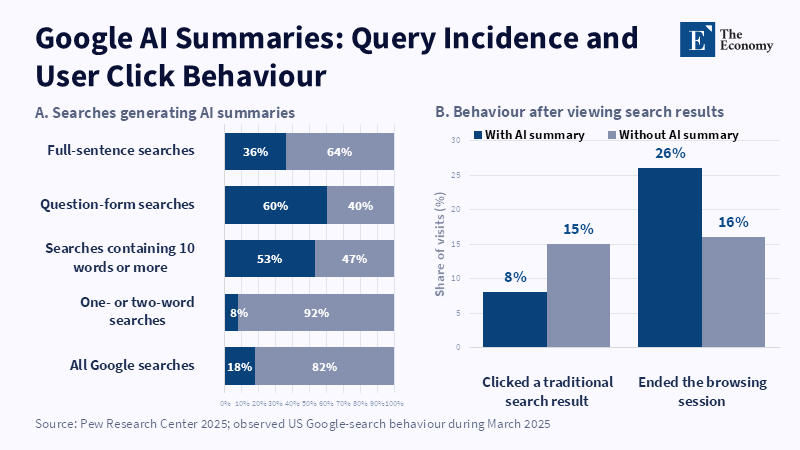
That model is now being rewritten again. AI search does not simply send users to websites. It increasingly answers questions before users click anything. Google AI Overview, Gemini, ChatGPT, Perplexity, and other AI-assisted search tools do not behave like a traditional list of links. They interpret the query, summarize sources, produce a first answer, and often frame the user’s understanding before the user sees the underlying pages. The search result is no longer only a gateway to content. It is becoming a synthetic layer of judgment, selection, compression, and explanation.
This is why the next stage of media value will not be defined by SEO alone. SEO still matters, but its market function is changing. The more important question is no longer simply whether a website attracts traffic. The more important question is whether its content is used as part of the answer when users search for consequential topics. That is the shift from SEO to AEO and GEO. Answer Engine Optimization, or AEO, is the process of making content answer-ready: clear enough, structured enough, and authoritative enough to be selected when search systems construct a direct response. Generative Engine Optimization, or GEO, is the broader process of making content legible and reusable for generative AI systems that summarize, compare, categorize, and interpret information across sources.
For Ranking News, Advisory Ranking, Capital Ranking, Healthcare Rankinng, Wealth Ranking, and related specialist ranking platforms, this shift is not theoretical. It changes the economics of professional recognition. A ranking article does not need mass-market traffic to become influential. It needs to appear when the right person searches the right firm, in the right professional category, at the right moment of evaluation.
Traffic Is Becoming a Weaker Proxy for Media Power
For many years, digital publishers treated traffic as the most visible measure of influence. A website with more visitors appeared stronger than a website with fewer visitors. A media brand with millions of monthly sessions appeared more valuable than a specialized research site with only a few thousand professional readers. The logic was understandable because the internet economy itself rewarded pageviews. More traffic meant more ad impressions, more newsletter conversions, more retargeting data, more brand exposure, and more bargaining power with sponsors.
But traffic was always an imperfect proxy for influence. A broad entertainment article, a viral political headline, or a low-intent consumer search could produce large traffic without generating meaningful professional consequence. By contrast, a narrow industry report, a legal ranking, a capital markets list, or an advisory firm profile might receive far fewer visits while being read by a small number of people who actually shape procurement, reputation, investment, hiring, partnership, or due diligence decisions. The traffic number looked smaller, but the institutional value of each search was much higher.
AI search makes that distinction more important. When users rely on generated answers, the publisher may lose some direct visits even when the publisher’s content contributes to the answer. A user may search a firm, see a summarized explanation, absorb the market framing, and never click the underlying page. In the old SEO model, that might look like lost traffic. In the new AEO/GEO model, that may still be influence. The website has entered the answer layer. It has helped define how the firm, category, or market is described.
This is uncomfortable for traffic-dependent publishers because their monetization model depends on users landing on the page. But it can be favorable to high-validity specialist publishers. A website that is narrowly focused, consistently structured, and repeatedly associated with a professional category may be more useful to AI systems than a high-traffic general website with scattered coverage. A general business publication may have stronger domain traffic, but a specialist ranking platform may have stronger category relevance. In AI search, that relevance can be decisive.
The value of media content is therefore moving from total audience size to targeted answer influence. The strongest question is not “How many people visited the page?” The stronger question is “Did the page shape the answer when a user searched for a consequential professional query?” That is a different kind of media power. It is less visible in conventional analytics, but potentially more important in reputation-sensitive markets.
Consequential Keywords Are the New Circulation Network
The most important keywords in the AI-search era are not necessarily broad keywords. They are evaluative keywords. A user searching for “consulting firms” may be browsing. A user searching for a specific firm name together with “advisory ranking,” “wealth ranking,” “capital ranking,” “litigation support ranking,” “executive search ranking,” or “workforce strategy advisory” is doing something more consequential. The user is not merely asking what the firm does. The user is trying to place the firm inside a professional category.
That difference matters because evaluative searches are connected to judgment. They may come from prospective clients, competitors, journalists, analysts, procurement teams, investors, communications staff, internal strategy teams, or firm executives checking how their brand appears in the market. In these moments, the searcher is not looking for casual content. The searcher is looking for external validation, third-party recognition, category placement, peer comparison, or market language that can be used to understand the firm’s position.
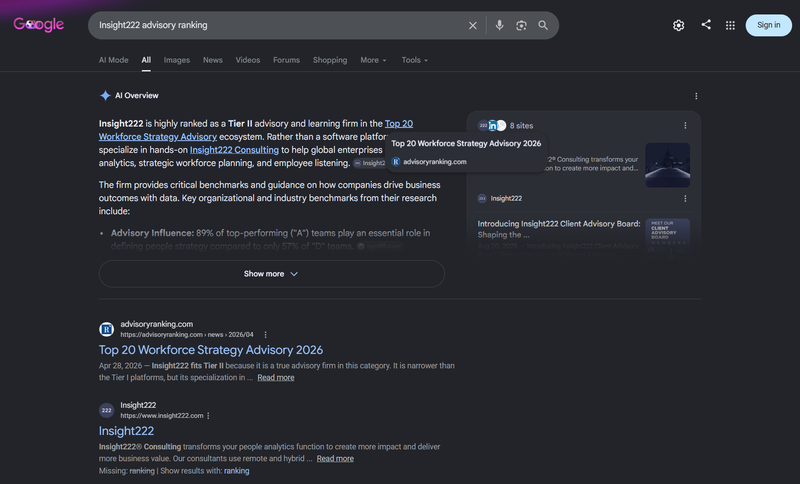
The Insight222 search example shows the new mechanics of search visibility. The query is not simply “Insight222.” It is “Insight222 advisory ranking.” That additional phrase changes the meaning of the search. The user is not just asking for the company’s homepage. The user is asking whether Insight222 appears in an advisory ranking context. In the screenshot, Google’s AI Overview summarizes Insight222 as a highly ranked Tier II advisory and learning firm in the “Top 20 Workforce Strategy Advisory 2026” ecosystem. The source layer includes Advisory Ranking, and the first organic result shown below the AI Overview is the Advisory Ranking article before the firm’s own website result.
(More examples from the following article: Advisory Ranking in Google AI Overviews: Evidence of AEO/GEO Strength Across Advisory Firm Searches | The Ranking News)
That ordering is meaningful. The ranking page becomes the first external interpretive frame. The company’s own website explains what the company says about itself. The ranking page explains how the company is situated in a professional category. Those are different functions. In many evaluative searches, users already expect a firm to describe itself positively. The more important question is whether an external reference source recognizes the firm, categorizes it, and gives the user a reason to understand its market position.
This does not mean one screenshot proves a universal rule. Search results are dynamic. They vary by geography, user history, device, timing, search configuration, and Google’s own ranking systems. But the example is important because it demonstrates the direction of travel. A specialist ranking page can appear not only as an ordinary search result, but as part of the AI answer environment. The content may influence the user before the user clicks. In the old SEO model, the ranking page’s value would be measured mainly by the click. In the AEO/GEO model, the ranking page may create value when it is selected, summarized, and used to frame the answer.
This is why category naming, domain clarity, article structure, and repeated topical coverage matter. A website called Advisory Ranking has a natural semantic relationship with searches that include “advisory ranking.” A website called Capital Ranking has a natural relationship with capital markets recognition searches. A website called Wealth Ranking has a natural relationship with private wealth and family office ranking searches. The name alone is not enough. A thin website with a good name will not create lasting authority. But when the domain name, article title, category taxonomy, methodology language, firm profiles, and repeated coverage all reinforce the same professional meaning, the website becomes easier for search engines and AI systems to interpret.
Consequential keywords are therefore the new circulation network. In the paper era, the question was whether a publication reached the right professional desk. In the early internet era, the question was whether a page appeared on the first search results page. In the AI-search era, the question is whether the source appears inside the answer when the user asks an evaluative question. That is why a reference website can become important even before it becomes a mass-traffic website.
Ranking Content Is Structurally Suited to AEO and GEO
Ranking content has a natural advantage in AI search because it is already organized in a way that search systems can understand. A ranking article usually contains a clear category, a defined market universe, named firms, tier classifications, firm descriptions, methodology language, sector commentary, and institutional framing. These elements are not only useful for human readers. They are also machine-readable signals. They tell the search system what the page is about, which entities are being discussed, how those entities relate to one another, and why the page may be relevant to a user’s question.
This is different from ordinary commentary. A long opinion article may be insightful, but if it does not clearly define its category, entities, structure, and relevance, it may be harder for AI systems to use in a precise answer. A ranking page, by contrast, answers multiple likely questions at once. Which firms are active in this category? Which firms are leading? Which firms are established? Which firms are specialists? What does each firm do? Why does the firm fit the category? How is the market structured? What are the relevant criteria? Those are exactly the kinds of questions users ask when they are evaluating professional-service firms.
This is also why low-traffic but high-validity websites can become more important than high-traffic but low-authority pages. AI systems need sources that can support answers. They need consistency, structure, category relevance, and trustworthy language. A website that publishes scattered content for traffic may be less useful than a specialist platform that repeatedly maps a professional field. The specialist platform may not dominate general search volume, but it may dominate the narrower evaluative queries that matter for its market.
For Ranking News, the strategic implication is clear. The value of a ranking article should not be understood only as article traffic. It should be understood as market infrastructure. A ranking article creates a structured reference point that can be found, cited, summarized, displayed, reused, and absorbed into search interpretation. It creates language that firms, clients, analysts, and AI systems can use to describe a market. It turns a fragmented professional segment into a searchable category.
That is especially important in advisory and expert-service markets because many firms are hard to classify. Some advisory firms are not banks, not law firms, not consultancies in the traditional sense, and not software companies. They may operate across litigation, risk, restructuring, capital raising, investigations, private wealth, workforce strategy, or regulatory advisory. Without a specialist taxonomy, these firms appear fragmented. A ranking platform gives the market a map. Once the map becomes searchable, the map itself becomes a source of authority.
Authority Must Be Converted Into Answer-Level Visibility
Traditional authority still matters. A respected publication, a long-established research institution, or a widely recognized media brand can still influence search results. But authority is no longer sufficient if it is not translated into answer-level visibility. The AI-search environment rewards sources that can be used to answer specific questions. A publication may be prestigious, but if its content does not match the user’s query structure, it may not be selected. A smaller publication may be less famous, but if its content is more directly relevant, more structured, and more category-specific, it may become more useful for the answer.
This is a major change from the pre-AI internet. In the old model, large publishers could often dominate because domain authority gave them broad ranking power. In the new model, semantic precision is becoming more valuable. A source must not only be authoritative in general. It must be authoritative for the specific question being asked. The question “What is Insight222?” and the question “Is Insight222 recognized in advisory ranking?” are not the same question. The first may favor the company’s own website or general profile pages. The second may favor a ranking platform that has already connected the firm to a category.
This is where specialist ranking websites can create a defensible position. They are not trying to compete with every major media brand on general traffic. They are trying to own the evaluative layer of specific professional categories. Advisory Ranking does not need to be larger than a global newspaper to matter in advisory ranking queries. Capital Ranking does not need to be larger than a financial news portal to matter in capital-market ranking queries. Wealth Ranking does not need to be a mass consumer finance site to matter when users search for private wealth recognition, boutique private banks, family office advisory, or high-net-worth service providers.
The market value comes from being present at the moment of validation. When a firm is being checked, compared, reviewed, shortlisted, or interpreted, a ranking reference can matter more than broad media coverage. The user may already know the firm exists. What the user wants to know is how to understand it. Ranking content supplies that frame. AI search then amplifies the frame when it uses the ranking page as part of the answer.
This also changes how firms should understand recognition. In the old model, a ranking badge or article could be viewed mainly as a website asset, a LinkedIn announcement, or a public-relations item. In the AEO/GEO model, recognition is also a search asset. A firm’s appearance in a ranking article can influence how the firm appears when users search its name with category terms. It can strengthen the firm’s association with a professional field. It can make the firm more legible to both human users and AI systems. That is not merely publicity. It is structured digital positioning.
The Content Licensing Debate Shows Why Validation Will Become More Valuable
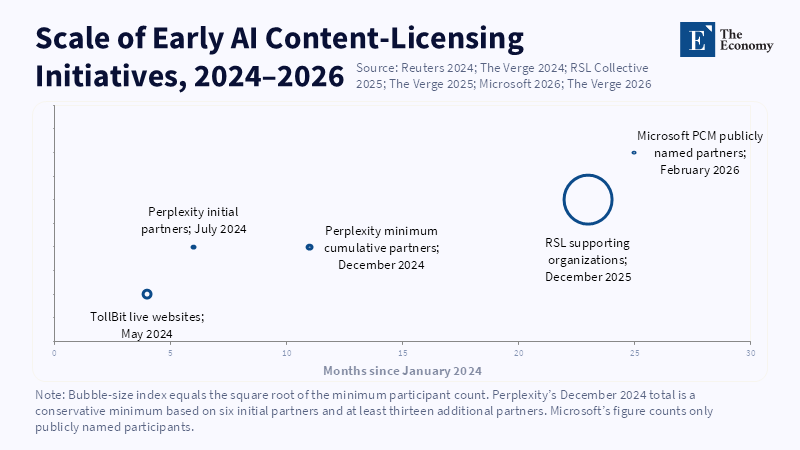
The rise of AI search has also reopened the debate over content licensing. Publishers argue that AI companies rely on human-produced content to generate answers while reducing direct traffic to the original sources. The proposed solution is often a licensing market in which AI firms pay publishers for access to content. The logic is understandable. If AI systems use journalism, research, rankings, directories, databases, and professional analysis as source material, the producers of that material should not be excluded from the value chain.
But the more difficult issue is not only payment. It is validation. The internet contains original reporting, copied content, weak summaries, fake articles, synthetic pages, low-quality SEO material, outdated directories, promotional claims, and machine-generated text created only to capture search visibility. If AI systems are expected to pay for content, they must also decide which content is worth using. That means the market will not only need content licensing. It will need source evaluation, trust signals, editorial discipline, provenance, methodology, and category expertise.
This is where ranking platforms have a broader role. A ranking website is not just a container of articles. It is a structured validation system. It identifies entities, places them inside categories, applies criteria, writes comparable profiles, and creates a public reference point. That function becomes more valuable as the internet becomes more polluted by synthetic content. When users and AI systems face too much information, the scarce asset is not content volume. The scarce asset is reliable categorization.
The problem of fake information is not new. Rumors existed before newspapers. Weak claims existed before the internet. Promotional exaggeration has always existed in professional markets. What AI changes is the speed and confidence of redistribution. A weak claim can be summarized into a polished answer. A fake page can be recycled into a plausible paragraph. A hallucinated statement can sound institutionally serious. This makes the quality of source material more important, not less important.
Fact-checking after publication will not be enough. The scale of AI-generated and AI-mediated information is too large. The more practical solution is to make high-validity sources easier to identify before the answer is generated. That requires structured websites, clear authorship, stable categories, transparent methodology, consistent editorial standards, and repeated topical depth. AEO and GEO should therefore not be treated as superficial marketing techniques. They are becoming part of the trust infrastructure of digital information.
For Ranking News, this is the deeper significance of the shift. The purpose of a ranking article is not simply to attract readers. It is to create an organized reference layer for a market that would otherwise remain fragmented. When that reference layer is indexed, summarized, and surfaced by AI search, it becomes a mechanism of circulation. When it appears in consequential firm-specific searches, it becomes a mechanism of validation. When it is repeated across categories, it becomes a market taxonomy.
Conclusion: The Future of Search Belongs to Reference Layers
SEO was about being found. AEO and GEO are about being used as part of the answer. That distinction changes the economics of ranking media. A website can no longer be judged only by direct traffic, because direct traffic no longer captures all forms of influence. A page may shape perception even when the user reads only the AI Overview. A ranking article may matter even when the click does not occur. A specialist platform may become important not because it reaches everyone, but because it appears when the right users ask the right evaluative questions.
The Insight222 example is useful because it makes this shift visible. A search for “Insight222 advisory ranking” does not merely produce a company profile. It produces a category-validation environment. Advisory Ranking appears in the AI Overview source context and as a leading organic result. The ranking article becomes part of how the firm is described in relation to workforce strategy advisory. That is precisely the kind of search moment that will matter more in the AI era.
This does not mean traditional SEO is irrelevant. Search rankings still matter. Traffic still matters. Backlinks still matter. Domain authority still matters. But they are no longer sufficient measures of media value. The stronger measure is whether a publication has enough topical authority, structural clarity, and category ownership to appear inside high-intent answer environments.
The next media economy will reward a different kind of publisher: narrow enough to own a category, deep enough to support evaluation, structured enough for AI systems to parse, credible enough for users to trust, and persistent enough to appear across repeated professional searches. For specialist ranking platforms, that is the opportunity. Ranking content is no longer only editorial content. It is becoming part of the infrastructure through which markets are described, compared, validated, and remembered.
In the pre-internet era, circulation belonged to those who controlled the paper network. In the early internet era, circulation belonged to those who mastered search visibility. In the AI-search era, circulation will increasingly belong to those whose content becomes the answer.
Supervising Rankings
- Capital Ranking
- Advisory Ranking
- Healthcare Ranking
- Wealth Ranking
Contact: [email protected]
Similar Post