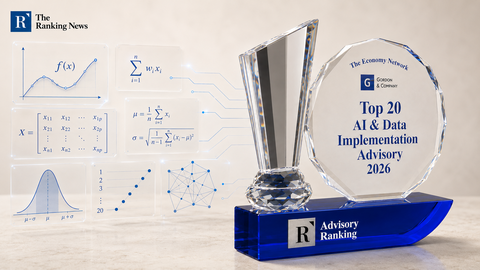
How Data Availability Shapes the Scope of Global Rankings

Supervising Rankings
- Capital Ranking
- Advisory Ranking
- Healthcare Ranking
- Wealth Ranking
Contact: [email protected]
First Published
Updated On
The availability of reliable data plays a decisive role in determining what rankings can measure
Differences in data infrastructure across sectors and countries influence how benchmarking systems are designed
Understanding data availability helps explain the scope and limitations of global ranking systems

Modern ranking systems depend heavily on the availability of reliable and comparable data. Whether evaluating universities, corporations, national economies, or cities, benchmarking frameworks require datasets that can be measured consistently across institutions and regions. The scope of a ranking system is therefore often determined not only by conceptual design but also by the practical availability of data. Some sectors maintain detailed reporting systems that enable sophisticated analytical frameworks, while others face significant limitations in data collection and standardization. As a result, the availability of reliable data shapes both the structure of ranking methodologies and the dimensions of performance that can realistically be evaluated. Understanding these constraints is essential for interpreting global rankings accurately.
Data Infrastructure Determines What Can Be Measured
The analytical power of ranking systems depends largely on the data infrastructure supporting the institutions being evaluated. In sectors where comprehensive datasets are available, ranking methodologies can incorporate detailed indicators that capture multiple dimensions of institutional performance.
Higher education provides one of the clearest examples of strong data infrastructure. Academic research output is documented through global bibliometric databases that track millions of publications and citations across scientific disciplines. These databases allow ranking organizations to measure research productivity, collaboration networks, and citation impact with high levels of precision.
Corporate sectors also benefit from extensive data infrastructure, particularly in markets where companies are required to publish standardized financial reports. Publicly listed firms disclose financial performance, capital investments, and operational data through regulatory filings. These disclosures provide a rich dataset for corporate benchmarking systems.
Government and national competitiveness rankings rely on large statistical systems maintained by national governments and international organizations. Economic indicators such as GDP growth, trade balances, employment statistics, and investment flows are regularly collected and standardized across countries.
However, not all sectors possess similarly robust data infrastructure. Some industries operate with limited public reporting, making it difficult to collect consistent datasets across institutions. Private companies, for example, often disclose far less information than publicly listed corporations.
In sectors with limited data infrastructure, ranking systems must rely on smaller datasets or alternative measurement approaches. These limitations can restrict the scope of benchmarking frameworks and influence the indicators used in evaluation methodologies.
Consequently, the design of ranking systems often reflects the underlying data ecosystems surrounding the institutions being evaluated.
Differences in Reporting Systems Create Global Data Gaps
While some sectors maintain strong data infrastructure, significant differences exist in reporting systems across countries and regions. These variations can create challenges for ranking organizations attempting to compare institutions on a global scale.
National statistical systems differ in how they collect and report economic data. Some countries maintain highly detailed and transparent reporting frameworks, while others provide more limited datasets. These discrepancies can complicate efforts to construct global rankings that evaluate national performance consistently.
In higher education, universities in different countries may follow distinct reporting standards for research output, faculty employment, and institutional finances. Ranking organizations must therefore harmonize data from multiple reporting systems in order to produce comparable indicators.
Corporate benchmarking faces similar challenges. Financial reporting standards may vary between regulatory environments, and privately held firms often disclose limited operational data. These factors can create gaps in corporate datasets used for benchmarking systems.
Urban rankings also encounter data limitations because cities often collect statistics independently rather than through standardized global frameworks. Differences in municipal data collection methods can make it difficult to compare urban environments across countries.
To address these challenges, ranking organizations often rely on internationally standardized datasets maintained by global institutions. International organizations and research databases help harmonize data across regions by applying consistent definitions and measurement frameworks.
Nevertheless, data gaps remain a persistent challenge in global benchmarking. When reliable data is unavailable for certain institutions or regions, ranking methodologies must either exclude those entities or apply estimation techniques.
Both approaches introduce methodological trade-offs that influence the final structure of ranking systems.
Data Availability Influences Indicator Selection and Methodology
Because data availability varies across sectors and regions, ranking designers must select indicators that can be measured consistently across the institutions being compared. This practical constraint often shapes the structure of ranking methodologies.
Indicators that rely on widely available datasets are more likely to be incorporated into ranking frameworks. For example, financial performance indicators are commonly used in corporate rankings because standardized financial data is broadly available across companies.
Similarly, research publications and citations are frequently used in university rankings because bibliometric databases provide extensive global coverage of academic output.
In contrast, indicators requiring specialized or proprietary datasets may be more difficult to incorporate into ranking systems. Measuring dimensions such as organizational culture, leadership quality, or internal operational processes often requires qualitative assessments that are difficult to standardize across institutions.
As a result, ranking systems often rely on proxy indicators that approximate underlying performance dimensions. For instance, research spending may serve as a proxy for innovation capacity, while graduate employment outcomes may approximate educational effectiveness.
These proxy indicators allow ranking methodologies to measure complex concepts using available datasets. However, they may not capture every aspect of institutional performance.
Ranking designers must therefore balance conceptual accuracy with data feasibility. Indicators should represent meaningful aspects of institutional activity while remaining measurable across diverse institutions.
This balancing process illustrates the close relationship between data availability and methodological design. The scope of ranking systems is ultimately shaped by the datasets that can be collected reliably and consistently.
Expanding Data Ecosystems Are Transforming Ranking Systems
Although data availability has historically constrained ranking methodologies, advances in digital technology are gradually expanding the range of data available for benchmarking systems.
Large-scale digital databases now track activities such as academic research, financial markets, technological innovation, and global trade flows. These datasets allow ranking organizations to analyze institutional performance with increasing precision.
For example, patent databases enable detailed measurement of technological innovation across corporations and national economies. Venture capital datasets provide insights into startup ecosystems and entrepreneurial activity. Digital infrastructure indicators allow benchmarking systems to evaluate technological readiness across countries and cities.
The expansion of digital data sources is also enabling more sophisticated analytical techniques. Machine learning tools and large-scale data processing systems allow ranking organizations to analyze complex datasets that were previously difficult to interpret.
As data ecosystems continue to evolve, ranking methodologies are likely to incorporate new indicators that capture emerging dimensions of institutional performance. Areas such as artificial intelligence development, digital infrastructure, and environmental sustainability are already becoming prominent components of modern benchmarking systems.
However, the fundamental relationship between data availability and ranking design will remain. No ranking system can evaluate aspects of institutional performance that cannot be measured reliably.
Understanding this relationship helps explain both the capabilities and limitations of global ranking systems. Rankings provide valuable analytical insights, but their scope is ultimately determined by the data environments in which they operate.
Recognizing these constraints allows stakeholders to interpret ranking outcomes more realistically while appreciating the complex data infrastructures that support modern benchmarking frameworks.
Supervising Rankings
- Capital Ranking
- Advisory Ranking
- Healthcare Ranking
- Wealth Ranking
Contact: [email protected]
Similar Post