Top 30 Frontier Technology Venture Capital 2026

Review categories
- Early-Stage Venture Capital
- Growth & Crossover Venture Capital
- Corporate Venture Capital (CVC)
- Venture Capital Advisory & Placement
- AI & Deep Tech Venture Capital
- Healthcare & BioTech Venture Capital
- Climate & Energy Venture Capital
- Frontier Technology Venture Capital
- VC Allocators & Fund-of-Funds
- Secondaries & Liquidity Platforms
- Accelerators & Venture Platforms
- Venture Debt & Startup Financing
[email protected]
Input
Modified
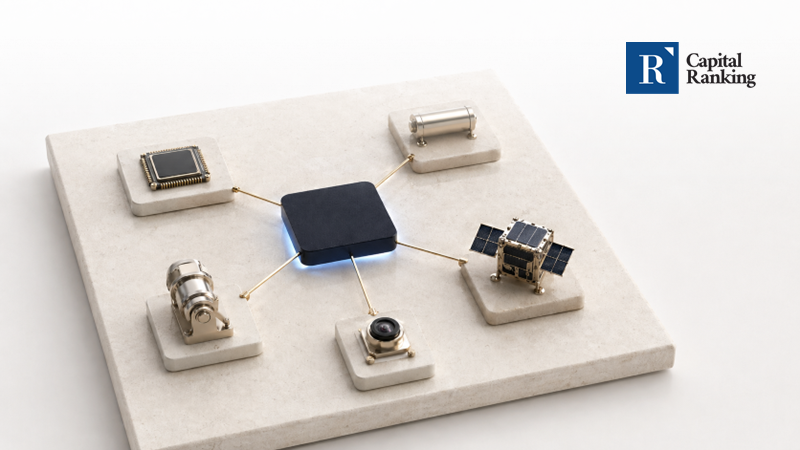
This report forms part of the Capital Ranking Venture Capital series, which evaluates specialist venture investors, startup-financing platforms, and private-market institutions across major strategy and company-development categories.
Frontier technology venture capital finances companies whose central risks are scientific, engineering, industrial, or mission-related rather than principally commercial software execution. These companies build across aerospace, defense technology, robotics, autonomous systems, advanced manufacturing, space infrastructure, artificial-intelligence hardware, quantum technologies, next-generation computation, sensing, advanced materials, energy systems, and other technically demanding markets.
The category is narrower than deep technology in general. It emphasizes technologies that must operate in physical, regulated, industrial, or strategically important environments. A frontier company may need to prove a scientific principle, manufacture reliable hardware, integrate software with complex machines, obtain certification, navigate government procurement, secure industrial customers, and finance facilities or inventory before a conventional growth model becomes visible.
These demands make specialist capital particularly important. Investors must understand technical milestones, supply chains, manufacturing economics, non-dilutive funding, regulatory pathways, government and enterprise sales, long development cycles, and the possibility that a product may create a market rather than enter an established one. Capital alone rarely solves these problems.
This ranking identifies independent venture firms with sustained relevance to hard technology, physical systems, dual-use innovation, space, defense, industrial transformation, and frontier science commercialization. It evaluates category commitment, technical credibility, founder access, investment activity, institutional depth, commercialization support, and current market relevance rather than ranking firms by one fund’s return, a single portfolio outcome, announced assets under management, or the number of transactions completed.
Market Overview
Frontier technology has moved from a peripheral venture category toward the center of industrial policy, national security, and long-term economic competition. Governments and companies increasingly view advanced manufacturing, autonomous systems, semiconductors, robotics, energy resilience, space infrastructure, secure communications, and critical supply chains as strategic capabilities. Venture-backed companies are therefore being asked to solve problems that were once addressed mainly by state laboratories, defense contractors, industrial conglomerates, or large corporate research organizations.
The investment model differs materially from conventional software venture capital. A frontier company may need laboratories, test facilities, specialized components, regulatory approval, manufacturing partners, government contracts, and repeated technical validation. Revenue can arrive unevenly, procurement can be slow, and early gross margins may not indicate the economics of mature production. Investors must distinguish temporary capital intensity from a structurally uneconomic model and genuine technical defensibility from an impressive but uncommercial research project.
Artificial intelligence is accelerating the opportunity set without removing physical-world constraints. Robotics, autonomous vehicles, industrial inspection, defense systems, scientific instruments, logistics, and space operations increasingly use AI at the edge. Yet model performance is only one part of the product. Reliability, latency, sensors, actuation, power consumption, safety, hardware availability, integration, and field maintenance determine whether intelligence can operate outside a controlled digital environment.
Dual-use investing has also become more institutionally important. Commercial technologies in autonomy, cyber-physical systems, geospatial intelligence, communications, energy, maritime systems, and aerospace can serve government as well as private customers. These markets require investors that understand mission requirements, procurement budgets, export controls, security considerations, and the differences between a promising pilot and a scalable program.
The strongest frontier investors combine technical fluency with company-building discipline. They help founders recruit specialized teams, obtain non-dilutive financing, define milestone-based capital plans, connect with industrial and government customers, establish manufacturing strategies, and attract later-stage capital without forcing a hard-technology company into a software timetable.
Industry Trend — 2026
The 2026 market is being shaped by three related forces: the institutionalization of defense technology, exceptional capital formation in commercial space, and the movement of AI into physical systems. Each expands the addressable market for frontier investors, but each also increases the importance of specialist underwriting.
FCF’s DefenseTech Venture Capital Report 2026 recorded €2.8 billion invested across 154 European defense-technology transactions in 2025. Relative to 2021, deal count had increased 148% and investment volume 718%, equivalent to a 69% compound annual growth rate in capital. Autonomous systems and combat technologies represented 34% of transactions and 38% of investment volume.
The expansion is not evenly distributed. FCF reported that Germany, the United Kingdom, and France together represented 62% of capital and 56% of transactions in the measured European market. Five companies—Helsing, TEKEVER, Quantum Systems, ICEYE, and Destinus—accounted for almost 60% of capital raised since 2021. The data therefore supports both the strategic growth of the category and the concentration risk facing investors that enter at mature valuations.
Commercial space shows a similar combination of growth and selectivity. The Generation Space Index for Q2 2026 recorded $7.5 billion of SpaceTech investment during the quarter and $23 billion over the trailing twelve months. Q2 included 141 transactions, while the trailing period included 620. Nine of the quarter’s ten largest financings involved capital-intensive companies, demonstrating that investor appetite is extending beyond software and downstream data applications into foundational infrastructure.
The space data also show a maturing financing cycle. Seed rounds still represented 47% of transactions over the trailing twelve months, but Series D-plus deal count increased 123% year over year to 49. Later-stage financings accounted for $7.2 billion, or 47% of total investment. Frontier investors must therefore support both technical company formation and the larger capital structures required when proven systems move into scaled manufacturing and deployment.
Physical AI reinforces this change across sectors. Robotics and autonomous systems require increasingly sophisticated models, but also dependable hardware, sensing, safety engineering, production capacity, and integration into customer operations. The result is a venture market in which software, hardware, industrial capability, and strategic customer access are becoming more interdependent.
| Frontier-market indicator | Current evidence | Implication for frontier investors |
|---|---|---|
| European defense technology | €2.8 billion across 154 transactions in 2025 | Defense innovation has developed into a material specialist venture category |
| DefenseTech growth since 2021 | Deal count increased 148%; investment volume increased 718% | Rapid institutional adoption creates opportunity but also pricing and concentration risk |
| Autonomous systems and combat technologies | 34% of European DefenseTech transactions and 38% of capital | Autonomy is a central bridge among AI, robotics, aerospace, and mission systems |
| European geographic concentration | Germany, the UK, and France represented 62% of capital and 56% of transactions | Specialist ecosystems and government-customer access remain geographically concentrated |
| DefenseTech company concentration | Five companies accounted for almost 60% of capital raised since 2021 | Headline growth does not imply broad access to capital across the company universe |
| Global SpaceTech investment | $7.5 billion across 141 transactions in Q2 2026 | Space has become a large institutional market while retaining specialized technical risks |
| SpaceTech trailing investment | $23 billion across 620 transactions in the twelve months to Q2 2026 | Sustained capital formation supports a broader specialist investment ecosystem |
| Capital-intensive space financings | Nine of the ten largest Q2 transactions involved capital-intensive companies | Infrastructure and hardware remain central rather than peripheral to frontier investing |
| SpaceTech seed activity | Seed represented 47% of transactions in the trailing twelve months | Technical company formation remains active despite larger headline growth rounds |
| SpaceTech Series D-plus activity | 49 transactions, up 123% year over year; $7.2 billion, or 47% of capital | Investors increasingly need capabilities spanning early technical validation and scaled deployment |
FCF’s figures cover European defense technology, while Generation Space measures the global commercial-space market. Their sector definitions, geographic boundaries, time periods, and transaction methodologies differ. The figures should be read as complementary indicators of frontier-market development rather than combined into a single investment total.
Methodology — Core Eligibility Criteria
Firms considered for this ranking were required to satisfy the following core conditions:
- Operate as an independent venture-capital or closely related private-investment organization with a clear frontier, hard-tech, dual-use, industrial, aerospace, defense, space, robotics, advanced-systems, or scientific-commercialization identity
- Demonstrate repeated investment in companies whose value depends materially on scientific validation, engineering execution, physical deployment, specialized infrastructure, regulated-market access, or mission-critical performance
- Maintain an institutionally meaningful role in seed, early-stage, multi-stage, or growth financing for technically complex companies
- Possess traceable current activity, an identifiable investment team, visible portfolio engagement, and operational relevance during the 2026 evaluation period
- Show technical credibility, domain access, founder relevance, or commercialization capabilities beyond generic participation in prominent technology rounds
- Maintain sufficient organizational continuity, specialist authority, portfolio depth, or ecosystem influence to justify inclusion
Corporate venture arms, bank- or insurer-owned investment divisions, sovereign and direct government funds, accelerator-only organizations, university programs without an independent venture platform, broad generalists without sustained frontier specialization, pure software investors, venture-debt providers, inactive firms, and acquired brands without meaningful independent identity were excluded or de-emphasized.
Specialist funds focused on space, defense, industrial technology, or physical systems remained eligible even where their sector mandate was narrower than the full frontier universe. Broader deep-tech or multi-stage firms remained eligible only when hard technology, dual-use systems, industrial transformation, or scientific commercialization represented a sustained and identifiable part of their investment identity.
Methodology — Ranking Factors
The selected firms were evaluated using a combination of qualitative and structural factors:
- Strength, clarity, and continuity of the frontier-technology, hard-tech, dual-use, industrial, space, defense, or advanced-systems investment identity
- Technical credibility and ability to evaluate scientific, engineering, manufacturing, infrastructure, and mission-related risks
- Record of leading or materially supporting companies across robotics, autonomy, aerospace, space, advanced manufacturing, AI infrastructure, sensing, energy systems, quantum technology, materials, and related markets
- Relevance to company formation, technical validation, first commercial deployment, production scale-up, and later institutional financing
- Ability to support specialized recruitment, laboratory and test access, manufacturing strategy, supply-chain development, regulatory navigation, and capital planning
- Understanding of government procurement, industrial sales, non-dilutive financing, export controls, certification, strategic partnerships, and complex customer environments
- Founder access across major frontier ecosystems and relationships with universities, laboratories, industrial companies, government institutions, and later-stage capital providers
- Capacity to finance long development cycles and distinguish milestone-driven progress from premature commercialization claims
- Geographic reach and ability to connect regional technical ecosystems with international customers, talent, partners, and follow-on investors
- Institutional continuity, partnership stability, organizational independence, and current investment activity
- Contribution to distinctive specialist models, including Tough Tech company building, physical-world AI, European deep-tech commercialization, SpaceTech investing, and dual-use market development
- Credibility among founders, co-investors, limited partners, technical experts, industrial customers, and public-sector stakeholders
The assessment universe comprised approximately 125 frontier-technology, hard-tech, industrial-technology, dual-use, defense, space, robotics, advanced-systems, and scientific-commercialization venture firms. Thirty firms were selected.
Tier classifications reflect relative institutional positioning within the frontier-technology venture-capital ecosystem. They do not constitute an investment recommendation, fund-performance ranking, fundraising endorsement, technical validation, procurement recommendation, or prediction of portfolio-company outcomes.
Company Profiles and Further Reference
Firm names appearing in this ranking are linked to their corresponding profiles in The Economy Wiki for companies, where available. These profiles provide additional background on each organization, including its principal activities, sector focus, market positioning, leadership, corporate information, and related rankings and analysis across The Economy Network.
The Economy Wiki profiles are maintained as editorial reference pages and may be updated as new public information becomes available.
Tier I — Leading Frontier Technology Venture Capital Platforms
Lux Capital
- Headquarters: New York / Menlo Park, United States
- Founded: 2000
Lux Capital is one of the defining institutional platforms in frontier technology. It invests across aerospace, defense, robotics, artificial intelligence, biotechnology, advanced computing, autonomy, manufacturing, and scientific infrastructure, with a consistent willingness to support companies before conventional markets or underwriting frameworks are fully established.
The firm’s importance lies in combining technical ambition with institutional market formation. Frontier founders often need to explain not only why a technology works, but why customers, regulators, governments, and later investors should recognize an emerging category. Lux’s brand, scientific network, communications capability, and access to large pools of follow-on capital can assist that transition.
Lux fits Tier I because frontier investing is a durable organizing identity rather than an opportunistic allocation within a generalist portfolio. Its longevity, technical range, founder access, ability to support difficult narratives, and continued relevance across strategic technology markets make it a natural anchor for the ranking.
Founders Fund
- Headquarters: San Francisco, United States
- Founded: 2005
Founders Fund is a broad venture firm whose influence in frontier technology remains too substantial to overlook. It has backed companies across space, defense, artificial intelligence, biotechnology, energy, financial infrastructure, and other technically or institutionally ambitious markets.
Its differentiating strength is a tolerance for non-consensus company formation. Aerospace, autonomy, defense systems, advanced infrastructure, and new industrial platforms frequently require investors to accept regulatory complexity, unusual capital needs, extended development periods, and founders whose plans appear impractical under standard venture assumptions.
Founders Fund fits Tier I because it has repeatedly helped move frontier categories into mainstream venture consideration. The firm is less specialized than several peers in the ranking, but its company access, scale, market influence, and willingness to support technically ambitious founders give it category-defining relevance.
DCVC
- Headquarters: Palo Alto, United States
- Founded: 2011
DCVC invests in companies applying computational, scientific, and engineering advances to large physical and industrial markets. Its activity spans robotics, space, industrial systems, climate infrastructure, cybersecurity, computational biology, artificial intelligence, and scientific discovery.
The firm is particularly relevant where value creation depends on the interaction among data, computation, hardware, and domain expertise. Such companies require investors to understand technical milestones, customer validation, manufacturing or infrastructure constraints, and the financing path from early proof to commercial deployment.
DCVC fits Tier I because it operates a disciplined deep-technology platform with clear physical-world and scientific-commercialization relevance. Its technical credibility, broad specialist portfolio, institutional continuity, and experience supporting non-linear company-development cycles place it among the strongest dedicated frontier investors.
Eclipse
- Headquarters: Palo Alto, United States
- Founded: 2015
Eclipse focuses on the transformation of physical industries through robotics, automation, manufacturing technology, logistics, supply-chain systems, defense, industrial software, and hardware-enabled platforms. Its thesis centers on technology that changes how essential products are designed, produced, moved, and operated.
That operating orientation is valuable because physical-world companies face challenges that software metrics do not capture. Product reliability, component availability, factory strategy, field deployment, customer integration, safety, and working capital can be as important as user growth or recurring revenue.
Eclipse fits Tier I because it is one of the clearest specialist platforms for industrial and physical technology. Its company-building model, understanding of hardware-software integration, and relevance to the expansion of AI into factories, logistics networks, vehicles, and mission systems give it a leading position.
Engine Ventures
- Headquarters: Cambridge, United States
- Founded: 2016
Engine Ventures invests in Tough Tech companies translating scientific and engineering breakthroughs into businesses across climate, human health, advanced systems, computation, industrial technology, energy, and foundational infrastructure.
Its platform is designed around the commercialization gaps that frequently constrain frontier companies. Founders may need laboratories, technical talent, academic relationships, government access, industrial partners, milestone-based financing, and support moving from a research result into a reliable product. Engine’s ecosystem and operating resources address these needs directly.
Engine Ventures fits Tier I because its category alignment is exceptionally strong. Scientific commercialization and technically difficult company formation are not side themes within a broader venture mandate; they are the basis of the organization. Its institutional development, specialist network, and ability to support founders through early technical and commercial transitions sustain its leading-tier placement.
Tier II — Established Frontier Technology Venture Capital Firms
(Alphabetical order)
Anzu Partners
- Headquarters: Washington, D.C. / Tampa / San Diego / Boston, United States
- Founded: 2014
Anzu Partners invests in industrial and life-sciences technologies, including advanced manufacturing, materials, measurement systems, industrial automation, and scientific tools. It supports companies whose commercialization depends on technical validation, enterprise adoption, production strategy, and specialized market access.
The platform is especially relevant where frontier innovation reaches customers through industrial procurement rather than consumer distribution. Anzu fits Tier II because its domain depth, operational resources, and sustained focus on technically complex businesses give it clear category authority, although its identity is narrower and less globally visible than the Tier I platforms.
Future Ventures
- Headquarters: San Francisco Bay Area, United States
- Founded: 2018
Future Ventures backs companies across space, robotics, artificial intelligence, synthetic biology, climate systems, mobility, advanced manufacturing, and other long-horizon markets. Its identity is associated with founders pursuing technologies that can reshape large systems rather than optimize established digital categories.
The firm brings visibility and conviction to companies whose commercial path may initially be uncertain. Future Ventures fits Tier II because its frontier orientation is clear and influential, while its younger institutional history, concentrated partnership model, and broader reliance on exceptional individual opportunities place it below the larger dedicated platforms.
Harpoon Ventures
- Headquarters: San Diego / Menlo Park, United States
- Founded: 2018
Harpoon Ventures focuses on defense technology, aerospace, cybersecurity, artificial intelligence, infrastructure, and dual-use companies serving commercial and government markets. Its team and network are relevant to founders navigating mission requirements, government procurement, technical certification, and sensitive customer relationships.
The firm fits Tier II because national-security technology has become a major frontier category and Harpoon maintains a clear specialist position within it. Its platform is younger and more concentrated than those of the leading firms, but its current market relevance, defense access, and dual-use orientation are substantial.
Playground Global
- Headquarters: Palo Alto, United States
- Founded: 2015
Playground Global invests in deep-technology companies across robotics, automation, advanced computing, hardware, artificial intelligence, logistics, and industrial systems. Its operating orientation is suited to technical founders who must manage product engineering, supply chains, customer pilots, manufacturing, and repeated financing before scale becomes visible.
Playground fits Tier II because it has built a recognizable specialist franchise around technologies that combine computation with physical systems. Its category focus and hands-on capabilities are strong, while its smaller institutional scale and narrower external footprint distinguish it from the Tier I platforms.
Prime Movers Lab
- Headquarters: Jackson / San Francisco Bay Area, United States
- Founded: 2018
Prime Movers Lab finances breakthrough scientific and engineering companies across energy, transportation, space, agriculture, manufacturing, computation, and industrial technology. It concentrates on founders addressing large problems where technical validation and market creation may require unusual patience.
The firm fits Tier II because its frontier identity is explicit and its investment model is designed for science-driven businesses that may not conform to standard software milestones. Its shorter operating history and concentrated thematic style place it below longer-established leaders, but its category commitment and visibility remain significant.
Razor’s Edge Ventures
- Headquarters: Reston, United States
- Founded: 2010
Razor’s Edge Ventures invests in national-security and high-growth commercial technologies across cybersecurity, data infrastructure, sensing, space, aerospace, autonomy, advanced manufacturing, and other mission-critical markets. Its team combines investing, engineering, company building, and extensive government-sector experience.
The firm can support companies through procurement, program development, customer access, acquisitions, and growth-stage expansion as well as early venture formation. Razor’s Edge fits Tier II because of its institutional history, specialist authority, operating depth, and direct relevance to the convergence of frontier technology and national security.
Root Ventures
- Headquarters: San Francisco, United States
- Founded: 2013
Root Ventures is a seed-stage firm focused on engineering-driven companies across robotics, hardware, manufacturing, developer infrastructure, and technical systems. It often engages when a strong technical team still needs to define its initial market, product architecture, customer base, and capital plan.
Root fits Tier II because early specialist conviction is essential in frontier company formation. Its scale is smaller than that of multi-stage platforms, but its clarity of purpose, technical-founder access, and repeated engagement with hard problems give it an established role in the ecosystem.
Seraphim Space
- Headquarters: London, United Kingdom
- Founded: 2016
Seraphim Space operates a specialist investment platform spanning early-stage venture capital, a listed growth vehicle, and a dedicated accelerator. It invests across the SpaceTech lifecycle, including satellite infrastructure, communications, geospatial intelligence, in-space services, defense applications, and enabling technologies.
The organization’s research, sector network, international company access, and ability to support founders from early validation through later institutional capital distinguish it from narrower space funds. Seraphim fits Tier II because it is one of the clearest specialist authorities in a central frontier market, with meaningful scale and global reach despite its sector-specific mandate.
Shield Capital
- Headquarters: Burlingame, United States
- Founded: 2021
Shield Capital invests in early-stage companies across artificial intelligence, autonomy, cybersecurity, and space at the convergence of commercial technology and national security. Its team combines venture investing, company-building experience, military service, and senior government relationships.
The firm’s value lies in helping founders understand whether commercial-first, government-first, or parallel market development is appropriate for a mission-relevant product. Shield fits Tier II because its category focus is exceptionally current, its operating and advisory network is institutionally credible, and its active portfolio demonstrates a broader platform than its relatively recent founding date alone would suggest.
Vsquared Ventures
- Headquarters: Munich, Germany
- Founded: 2020
Vsquared Ventures invests in European deep technology across robotics, quantum computing, new space, advanced manufacturing, sensing, AI, biology, and energy systems. It operates within research and industrial ecosystems where founders must combine technical differentiation with international commercialization.
The firm fits Tier II because it provides a focused European counterpart to US frontier platforms and addresses the financing gap between research excellence and global company scale. Its younger history limits direct comparison with longer-established institutions, but its specialist mandate, regional relevance, and visible activity support established-tier placement.
Tier III — Specialist Frontier Technology Venture Capital Firms
(Alphabetical order)
AIN Ventures
- Headquarters: New York, United States
- Founded: 2020
AIN Ventures is a seed-stage investor focused on dual-use technology and companies led by military veterans or other mission-oriented founders. Its areas of interest include space, artificial intelligence, machine learning, sustainability technology, and related frontier markets.
The firm fits Tier III because it provides specialized access and early conviction for founders bridging commercial and public-sector use cases. Its platform remains smaller than the established national-security funds, but its clear mandate, traceable activity, and founder-community orientation make it a credible specialist inclusion.
Alpine Space Ventures
- Headquarters: Munich, Germany
- Founded: 2020
Alpine Space Ventures invests exclusively in early-stage space and space-enabled companies across Europe and the United States. Its portfolio spans satellite platforms, ground infrastructure, propulsion, components, geospatial systems, and other foundational parts of the commercial-space industrial base.
The firm fits Tier III because its industry-insider team, technical concentration, transatlantic network, and willingness to lead meaningful early rounds give it strong specialist relevance. Its narrower sector scope and comparatively short institutional history keep it below the broader established frontier platforms.
Beaten Zone Venture Partners
- Headquarters: Brisbane, Australia
- Founded: 2023
Beaten Zone Venture Partners backs Australian companies developing sovereign defense and space capabilities across land, sea, air, cyber, and space. Its focus includes systems that improve survivability, lethality, readiness, manufacturing capacity, and dual-use technical capability.
The firm fits Tier III because it adds a distinct Australian defense-industrial perspective to a market otherwise dominated by US and European investors. It remains an emerging platform, but its specialist mandate, active ecosystem engagement, and direct connection to sovereign capability development make it editorially relevant.
Cantos
- Headquarters: San Francisco, United States
- Founded: 2016
Cantos invests early in technically ambitious companies addressing critical industries, including defense, energy, infrastructure, space, manufacturing, climate resilience, and health. Its model emphasizes first institutional conviction before conventional commercial signals are fully visible.
The firm fits Tier III because its near-frontier thesis and willingness to finance unusual technical company formation are closely aligned with the category. Its concentrated seed-stage model and smaller institutional footprint distinguish it from the larger multi-stage specialists.
Embedded Ventures
- Headquarters: Los Angeles, United States
- Founded: 2020
Embedded Ventures invests in digital engineering, advanced manufacturing, and space operations. Its focus lies where software, hardware, aerospace infrastructure, and mission-critical physical systems interact.
The firm fits Tier III because it addresses enabling layers that are essential to the space and defense economies but less visible than end products. Its portfolio and thesis provide clear category alignment, although its narrower mandate, smaller organization, and shorter history limit direct comparison with established platforms.
Expeditions
- Headquarters: Warsaw / London, Poland / United Kingdom
- Founded: 2021
Expeditions invests in European defense and dual-use companies across cybersecurity, intelligence, autonomy, artificial intelligence, quantum technologies, privacy, communications, and space. Its team combines investment, military, policy, academic, and security expertise.
The firm fits Tier III because it provides an independent specialist platform for Europe’s expanding security-technology ecosystem and can connect founders across Central Europe, the UK, and wider allied markets. Its youth and early-stage concentration place it below more mature national-security investors, while its category clarity and policy access support inclusion.
Fifty Years
- Headquarters: San Francisco, United States
- Founded: 2015
Fifty Years backs pre-seed and seed companies using science and engineering to address major problems across climate, biology, food, health, space, robotics, hardware, and scientific infrastructure.
The firm fits Tier III because it is willing to engage before product-market fit with founders translating research into company formation. Its mission-driven portfolio spans several categories and overlaps with climate and biotechnology, but its sustained commitment to technically difficult businesses and early commercialization makes it a relevant frontier specialist.
Innovation Endeavors
- Headquarters: Palo Alto / Tel Aviv / New York, United States / Israel
- Founded: 2010
Innovation Endeavors invests in companies applying advanced technology to large industries, including robotics, industrial automation, artificial intelligence, infrastructure, agriculture, logistics, and healthcare. Its US-Israel network provides access to strong engineering and company-building ecosystems.
The firm fits Tier III because its industrial-transformation activity is meaningful, although its platform is broader than frontier technology and includes software-led opportunities. Its longevity, technical access, and record across automation and applied systems justify inclusion below more concentrated specialists.
OTB Ventures
- Headquarters: Amsterdam / Warsaw, Netherlands / Poland
- Founded: 2017
OTB Ventures is a pan-European investor focused on deep-technology companies at late-seed and Series A stages. Its principal areas include SpaceTech, enterprise automation and AI, cybersecurity, and fintech infrastructure, with an emphasis on proprietary technology capable of scaling internationally.
The firm fits Tier III because its space, automation, and real-technology franchises provide clear frontier relevance while strengthening Benelux and Central European representation. Its mandate includes software and financial infrastructure, so it is less concentrated than dedicated physical or dual-use funds.
Scout Ventures
- Headquarters: Austin, United States
- Founded: 2009
Scout Ventures invests at seed stage in frontier technologies developed by founders from military, intelligence, and national-laboratory communities. Its focus includes autonomy, robotics, quantum computing, cybersecurity, microelectronics, advanced energy, space, aerospace, and artificial intelligence.
The firm fits Tier III because its long engagement with dual-use founders, government networks, and non-dilutive financing gives it authentic category depth. Its investment scale and early-stage concentration are more specialized than those of the established national-security platforms.
Silent Ventures
- Headquarters: Dallas, United States
- Founded: 2022
Silent Ventures invests in early-stage defense and deep-technology companies, with an emphasis on founders building mission-critical products across aerospace, autonomy, advanced systems, manufacturing, and national security.
The firm fits Tier III because its thesis is directly aligned with the renewed defense-industrial and dual-use venture market. It remains a young and comparatively compact organization, but its specialist positioning, operating orientation, and focus on technically demanding founders make it a relevant emerging platform.
Space Capital
- Headquarters: New York, United States
- Founded: 2017
Space Capital invests in space-based technologies and enabling infrastructure, including satellite systems, communications, positioning, geospatial intelligence, data platforms, and space-enabled applications. Its research orientation helps clarify how space infrastructure creates value across terrestrial industries.
The firm fits Tier III because its market specialization remains clear and useful, particularly at the intersection of space assets and data applications. Its narrower platform and institutional scale place it below Seraphim Space, but its sustained sector presence and investment focus justify continued inclusion.
Supernova Invest
- Headquarters: Paris / Grenoble, France
- Founded: 2017
Supernova Invest backs European deep-technology companies across industrial technologies, digital infrastructure, healthcare, and cleantech. Its portfolio includes robotics, autonomous systems, space infrastructure, photonics, quantum computing, advanced materials, sensing, and other science-led markets.
The firm fits Tier III because it combines technical evaluation with experience in industrial scaling, intellectual property, and research commercialization. Its mandate is broader than frontier technology alone, but its institutional scale and depth across physical and scientific innovation make it a strong European specialist.
Type One Ventures
- Headquarters: Los Angeles, United States
- Founded: 2018
Type One Ventures is a multi-stage firm investing in technologies intended to support a more abundant and ultimately interplanetary civilization. Its portfolio and stated focus include space technology, robotics, artificial intelligence and automation, advanced mobility, nanotechnology, and human longevity.
The firm fits Tier III because it maintains one of the category’s clearest long-horizon frontier narratives and meaningful exposure to commercial-space infrastructure. Its thematic breadth and relatively young institutional history place it below more established or technically concentrated platforms.
Ubiquity Ventures
- Headquarters: Palo Alto, United States
- Founded: 2017
Ubiquity Ventures invests in early-stage companies bringing software and machine intelligence into the physical world. Its interests include smart hardware, robotics, sensing, industrial systems, and real-world computing platforms.
The firm fits Tier III because its thesis is closely aligned with physical AI and the growing integration of computation, devices, and deployed systems. Its category clarity is strong, while its small partnership model and early-stage scale make specialist-tier placement more appropriate than comparison with larger institutional funds.
Remarks
Frontier technology venture capital is not one uniform strategy. The selected firms include broad science-and-engineering platforms, industrial-technology investors, Tough Tech company builders, seed specialists, space-focused funds, and national-security investors. Their common role is to finance companies whose progress depends materially on technical execution, physical deployment, specialized infrastructure, or access to complex customers.
The 2026 environment increases both opportunity and underwriting difficulty. Defense budgets, commercial-space investment, industrial resilience, and physical AI are attracting capital, but headline growth remains concentrated in a limited number of companies and large rounds. Specialist investors must assess technical maturity, manufacturing economics, procurement pathways, regulatory constraints, capital requirements, and realistic customer adoption rather than treating strategic importance as proof of commercial durability.
Overlap with adjacent AI, climate, biotechnology, and deep-technology categories is unavoidable because frontier companies increasingly combine several technical disciplines. Inclusion in this ranking depends on sustained relevance to physical, industrial, scientific, space, or dual-use commercialization—not merely participation in artificial-intelligence financings or possession of a broad technology portfolio.
Tier classification reflects relative institutional positioning within the frontier-technology venture-capital segment. It does not represent investment performance, fund returns, a technical judgment, fundraising advice, procurement guidance, or an endorsement of any firm, fund, manager, security, portfolio company, or investment strategy.
Recognition
Inclusion in the Top 30 Frontier Technology Venture Capital 2026 ranking is an editorial determination of The Economy Rankings and is independent of licensing, advertising, sponsorship, or other commercial participation.
Ranked organizations may factually refer to their inclusion in the ranking in their own communications. When describing the result, firms should accurately reflect the tier structure and methodology used in the published ranking.
How the ranking should be interpreted
- Tier I represents the Top 5 firms, and the published order within Tier I reflects the ranking order.
- Tier II represents firms ranked within the Top 15, following Tier I. Firms within Tier II are displayed alphabetically; their displayed order should therefore not be interpreted as an individual numerical ranking.
- Tier III represents firms ranked within the Top 30, following Tiers I and II. Firms within Tier III are also displayed alphabetically, and their displayed order should not be interpreted as an individual numerical ranking.
- A firm's tier, rather than its alphabetical position within Tier II or Tier III, should therefore be used when describing its standing.
Referencing the ranking
Depending on the firm's published tier, appropriate factual descriptions may include:
- Tier I: “Ranked Tier I” or “Ranked among the Top 5”
- Tier II: “Ranked Tier II” or “Ranked among the Top 15”
- Tier III: “Ranked Tier III” or “Ranked among the Top 30”
Firms should not describe an alphabetical position within Tier II or Tier III as a specific numerical rank.
Use of The Economy Rankings recognition materials
Editorial inclusion in a ranking does NOT by itself grant permission to use The Economy Rankings badges, seals, logos, official recognition graphics, licensed quotations, or other proprietary recognition materials.
Organizations wishing to use official The Economy Rankings recognition materials in corporate websites, marketing materials, investor communications, client presentations, social media, press releases, or other external communications should refer to the applicable licensing terms and usage policies:
- The Economy Rankings License Structure — available licence levels and permitted recognition uses
Rankings License Structure | The Economy - The Economy Rankings License Policy — licensing conditions governing use of The Economy Rankings recognition, marks, and related materials
The Economy Rankings License Policy | The Economy - Recognition Use Guide — guidance on permitted wording, presentation, attribution, and use of ranking recognition
Recognition Use Guide | The Economy
Ranking inclusion remains editorially independent regardless of whether an organization purchases or holds a recognition-materials licence.
Recognized institutions may reference the designation in:
- corporate websites
- investor communications
- marketing materials
- client presentations
Licensing inquiries:
[email protected]

Review categories
- Early-Stage Venture Capital
- Growth & Crossover Venture Capital
- Corporate Venture Capital (CVC)
- Venture Capital Advisory & Placement
- AI & Deep Tech Venture Capital
- Healthcare & BioTech Venture Capital
- Climate & Energy Venture Capital
- Frontier Technology Venture Capital
- VC Allocators & Fund-of-Funds
- Secondaries & Liquidity Platforms
- Accelerators & Venture Platforms
- Venture Debt & Startup Financing
[email protected]
Similar Post